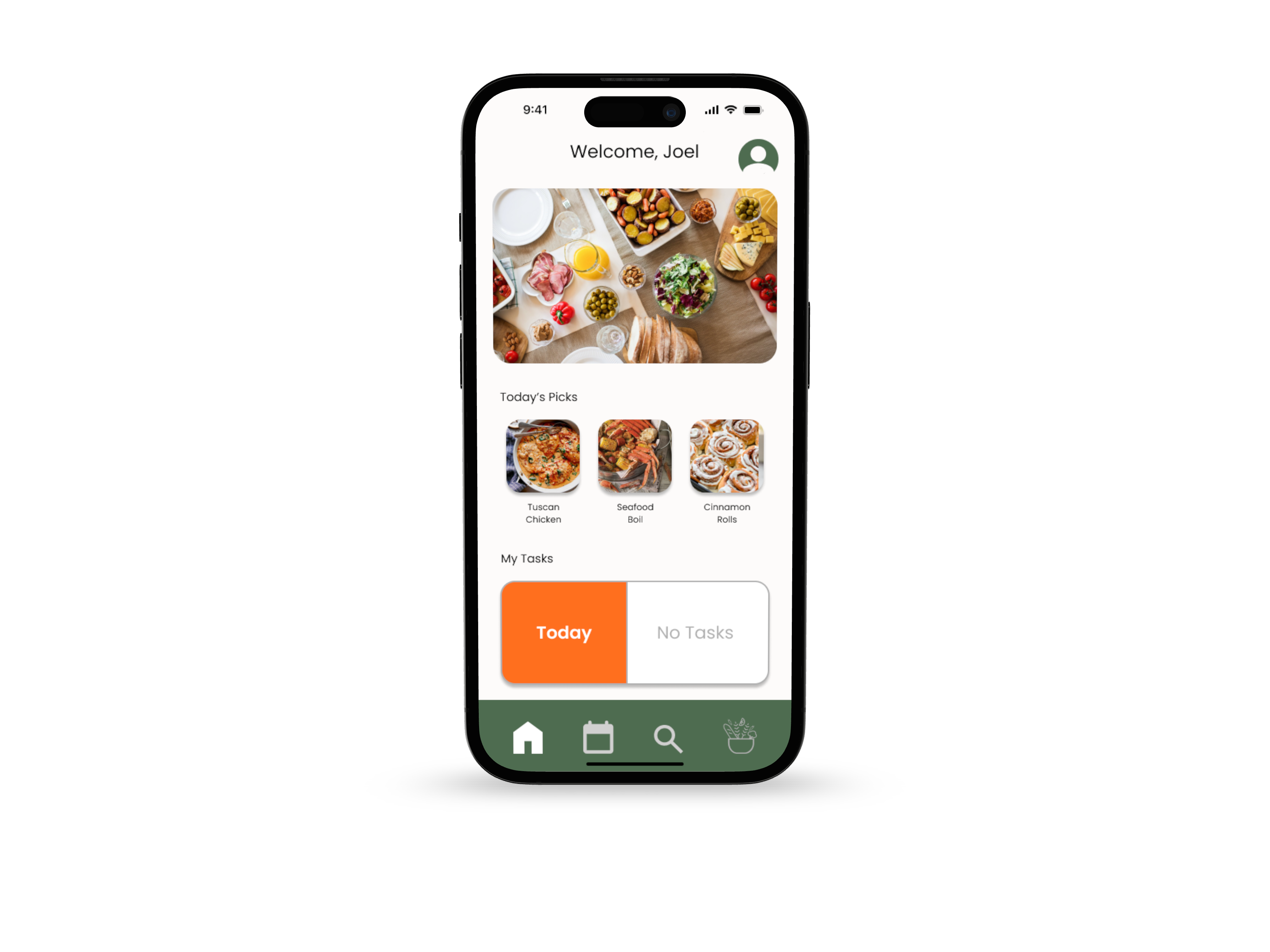
Project at a glance, for those short on time
Below is a high-level overview of the problem, the core product strategy, and the final outcomes.
Ladle is a high-fidelity iOS prototype for a recipe exploration and discovery app, built over three months for the Interaction Design 1 course at Kennesaw State University. The project began with a two-minute class pitch — I used narrative storytelling to convey how hard it is to eat well and affordably as a student — and after the idea was chosen, I became team lead for a group of four.
As lead, I guided three classmates through a modified Goal-Directed Design process, coordinating both the work and the people across the project's full lifecycle: from a hypothetical kickoff and user research, into modeling and design, then through usability testing into a refined second iteration. The result is Ladle — a prototype that brings structure to meal planning and motivates healthier eating habits.
The most valuable lesson came from a shift in focus during our second iteration: we broadened our scope beyond the structured, personalized core we had validated in testing. This attempt to have a wider audience dilluted the experience. It taught me that managing scale through phased rollouts is critical to securing growth without risking high-effort, unverified features.
Young adults want to cook — the barrier isn't recipes
Young adults in transition — moving out for the first time, adjusting to tighter budgets, managing their own schedules — often lack both the cooking experience and the motivation to develop it. The problem isn't a shortage of accessible or inclusive recipes. It's that existing tools assume a baseline of culinary familiarity and do not inspire people to cook - they are designed to meet them when motivation is already set
Ladle was designed to meet users where they are, and motivate people to explore. The core question was: what does an app look like when it treats cooking confidence as the primary product, not recipe delivery?
"The problem isn't access to recipes — it's confidence, motivation, and experimenting without breaking the bank."
Goal-Directed Design — grounding decisions in user goals
Goal-Directed Design, developed by Alan Cooper, grounds every design decision in a deep understanding of the user's goals, behaviors, and motivations — rather than starting from features or technology. The process moves through five phases, each building on the last.
We completed every phase except the final support stage, which covers production handoff in a real product context and didn't apply in an academic setting.
Below I have detailed the goal and tasks included in each phase, and provided examples of Ladle artifacts from each.
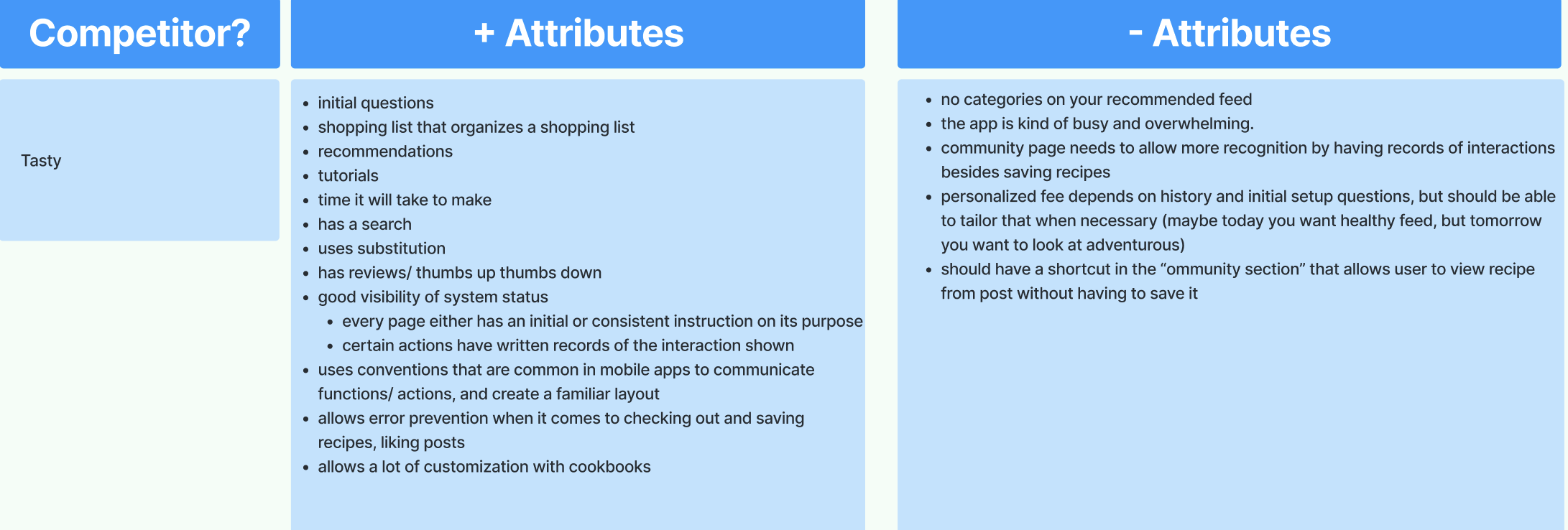
Competitive audit of Tasty mobile app
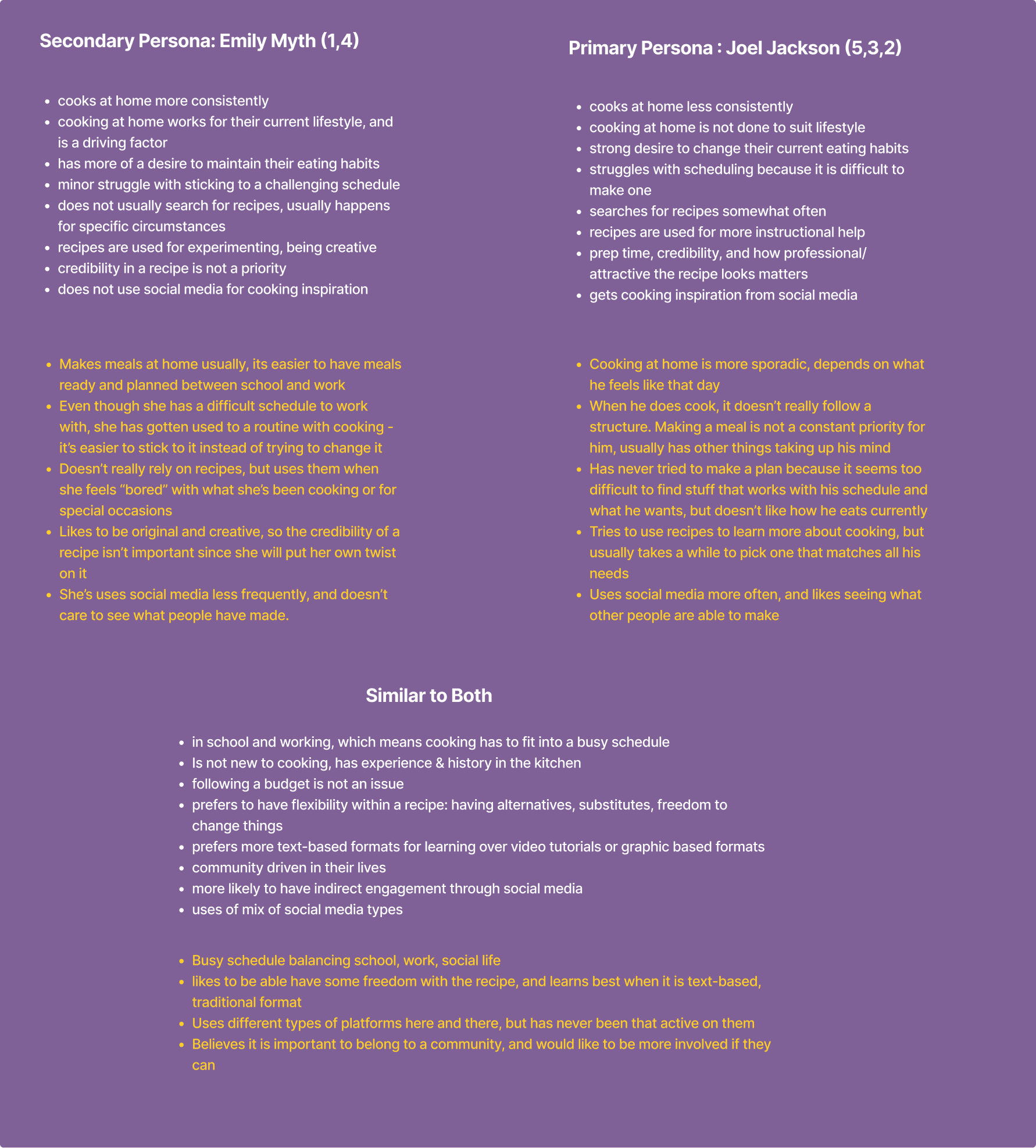
Sytnhesized person characteristics
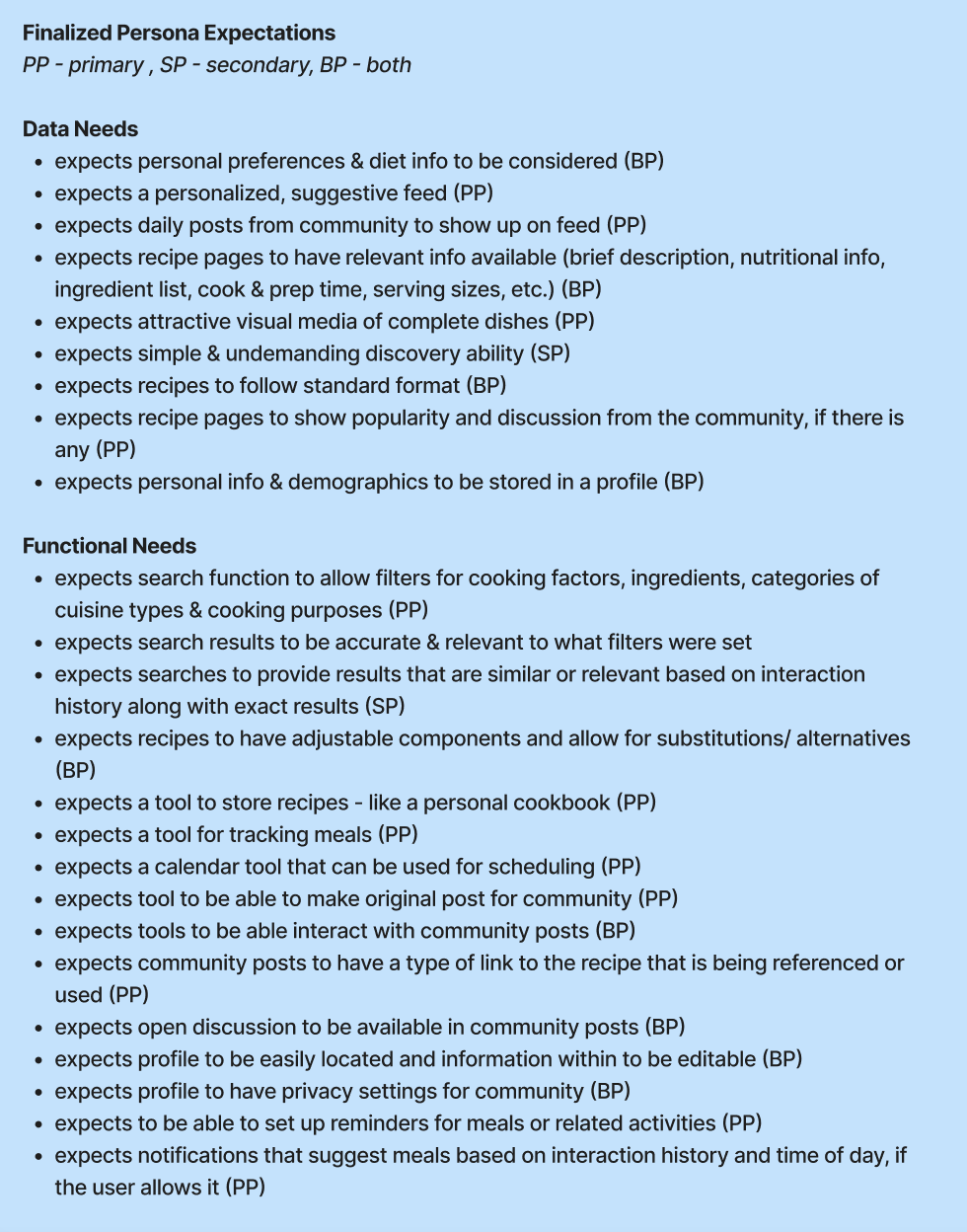
Finalized persona expectations, categorized under data functional
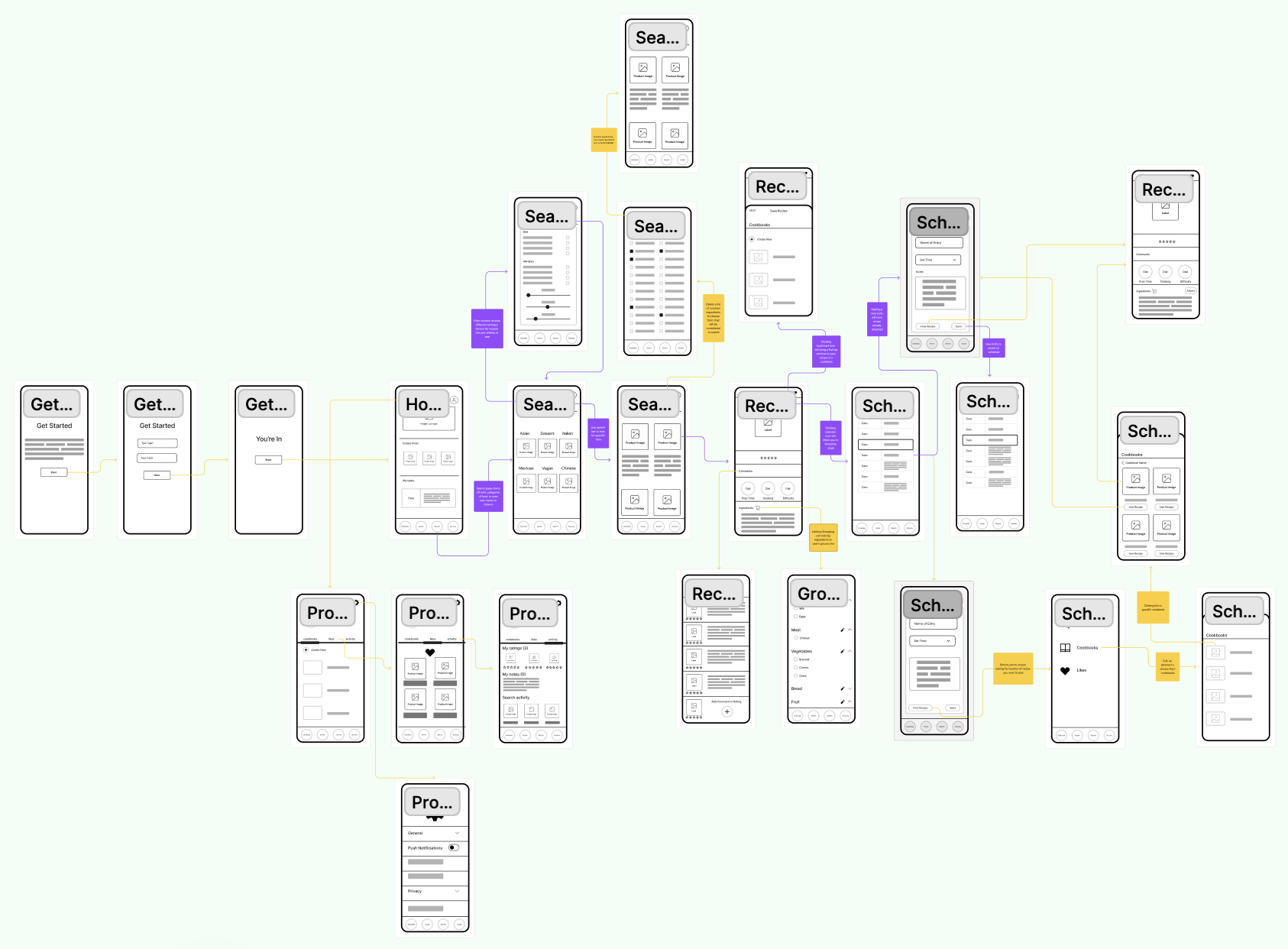
Wireframe with key path and validation scenarios
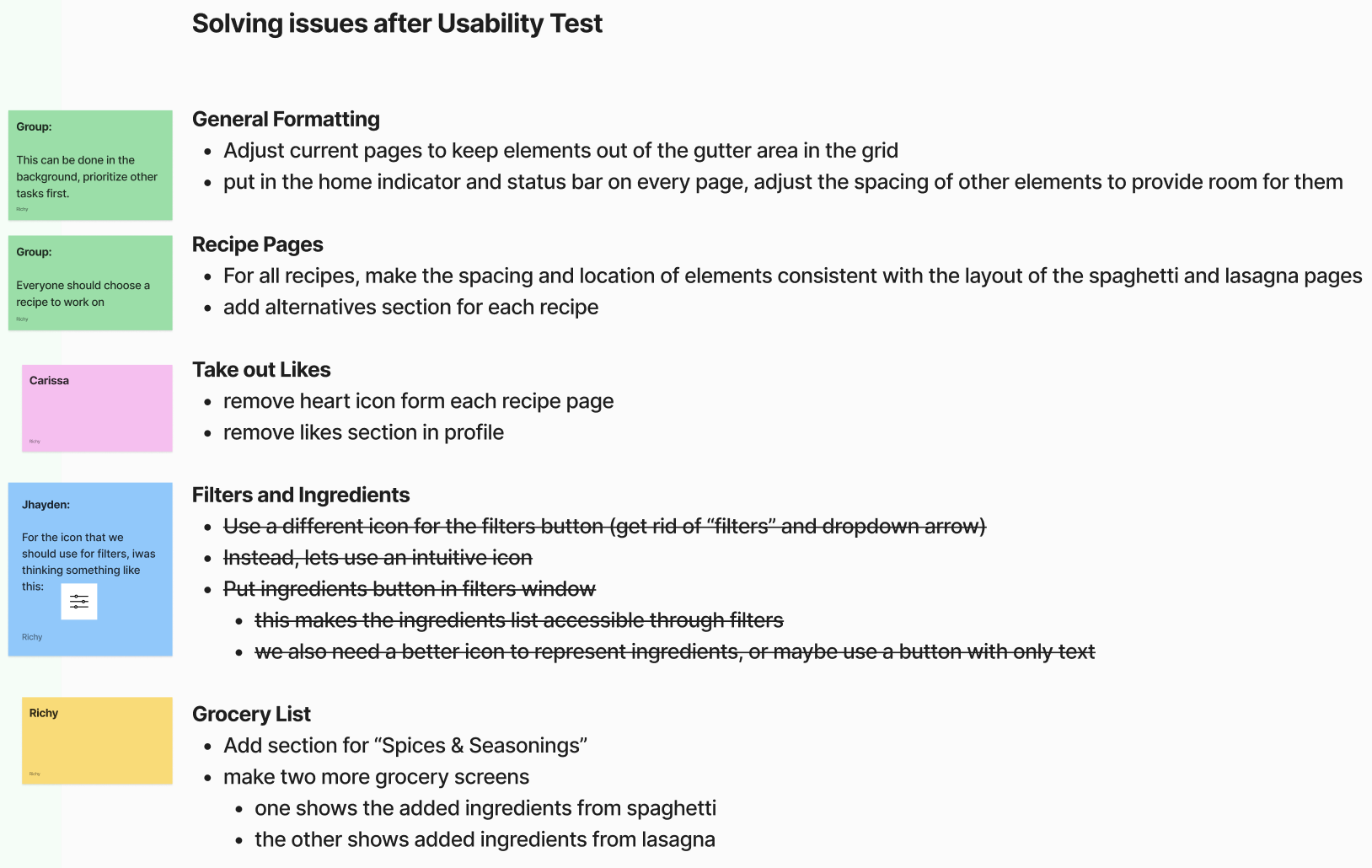
Refinment tasks identified by each memeber
If you want to see the adapted GDD process in full, you can view the Figjam space for my team below.
Taking Ladle from an idea to a user-centered design
With the problem framed and no real stakeholders to consult, we worked through Goal-Directed Design beginning from a hypothetical kickoff that stood in for the usual stakeholder alignment. My job was less about owning screens than keeping four people in sync and anchored to our user goals — and that began with how we ran research. To cover more ground without overloading anyone, I split the team into pairs and staggered the work: one pair started the literature review while the other began the competitive audit, then we switched, so both tracks ran in parallel at a sustainable pace.
For the competitive audit, I gave the team a Nielsen Norman Group source on usability heuristics so we could judge BuzzFeed Tasty, Kitchen Stories, and MyFridgeFood against consistent criteria. We then ran five ethnographic interviews with people who fit our user type, and I led the team through affinity mapping in FigJam — each member synthesizing independently before we consolidated everything into shared, categorized insights.
In modeling, we mapped behavioral variables onto continua, placed each interview subject along them, and looked for consistent clusters. Two clear patterns emerged and became our personas — Joel Jackson, our primary, and Emily Myth, our secondary. To close the phase, we produced a research report. I spearheaded the research synthesis by centralizing our team’s research artifacts and designing the report layout. Beyond structuring the document and aligning team sections, I took full ownership of authoring the executive summary, introduction, user-research insights, and final conclusion.
From the personas we wrote expectations, then a context scenario tracing Joel's day with the app, which gave us our design requirements — the objects, actions, and contexts the product had to support. Those requirements drove the build. We sketched screens by hand to set our key-path and validation scenarios and prioritize what to design first, moved them into wireframes in FigJam, and built the prototype collaboratively in Figma, dividing screens across the team and reviewing them together.
An honest account of scope drift
Ladle started with a clear target user — young adults with low cooking experience and motivation. We recognized a common pain with having structure and personalized culinary exploration. As the project progressed, the team saw opportnities to address more pain points, and the scope expanded beyond what the core feature set could faithfully serve. The result was a weaker main tool — a product that tried to speak to everyone and ended up being less precise for anyone.
a focused problem statement is not a limitation — it's a foundation. Without it, every subsequent design decision becomes harder to defend, and the methodology itself loses its anchor.
Goal-Directed Design gave us the right process. What I'd do differently is hold the scope boundaries more firmly, earlier — and use the methodology's own outputs (the personas, the scenarios, the requirements) as the check against any feature or audience expansion that threatened to dilute the original user focus.
What I carried forward
The experience of watching a well-defined problem gradually dilute under scope pressure — and not catching it soon enough — is something I've carried into every project since.
Using Goal-Directed Design as a methodology was a challenge, especially since it was the first time applying it. It is a rigorous framework, but knowing how to use GDD builds resilient, proof-driven type of design thinking. The retrospective is where Ladle earns its place in this portfolio: not as a polished outcome, but as the project that most clearly shaped how I work now.
I will provide a link to the prototype below. If you do not wish to experience the prototype, select screens will be shared as well.
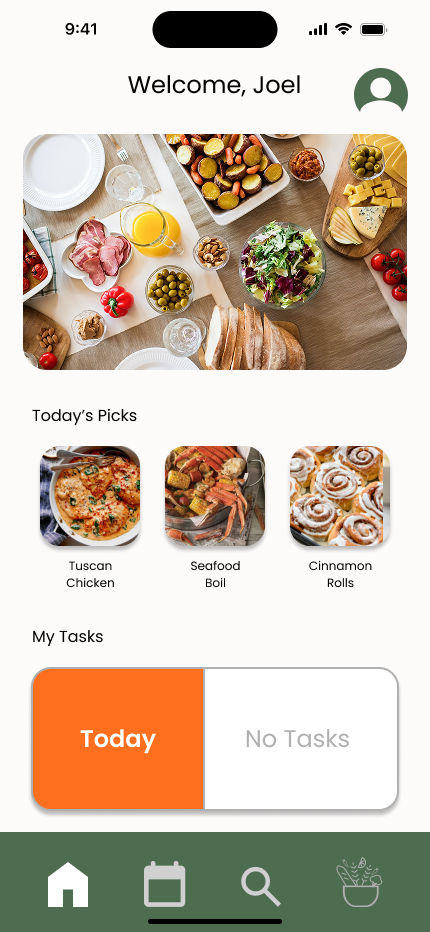
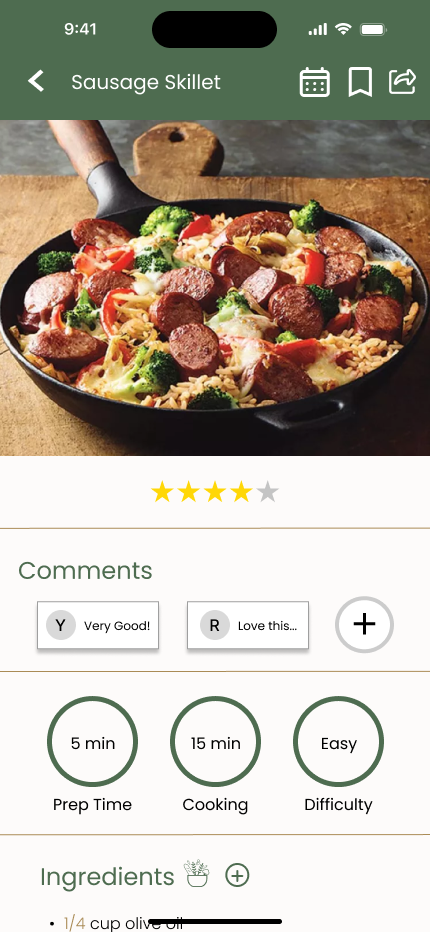
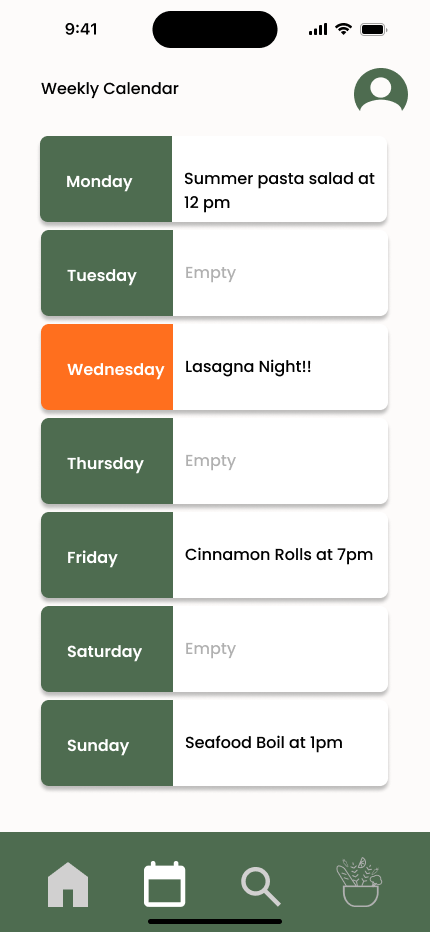
final prototype screens (left to right) - home, recipe example, calendar
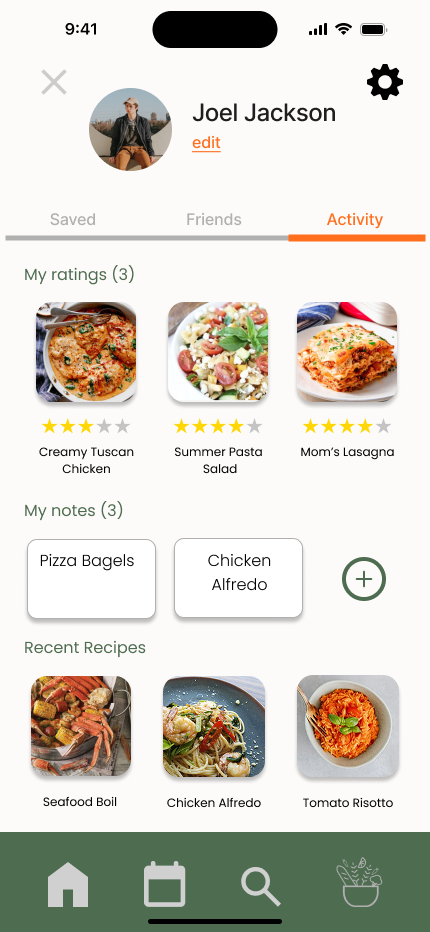
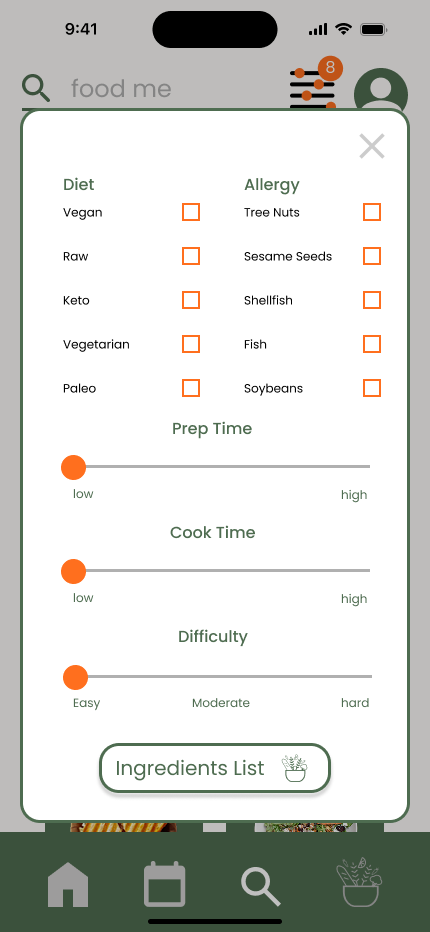
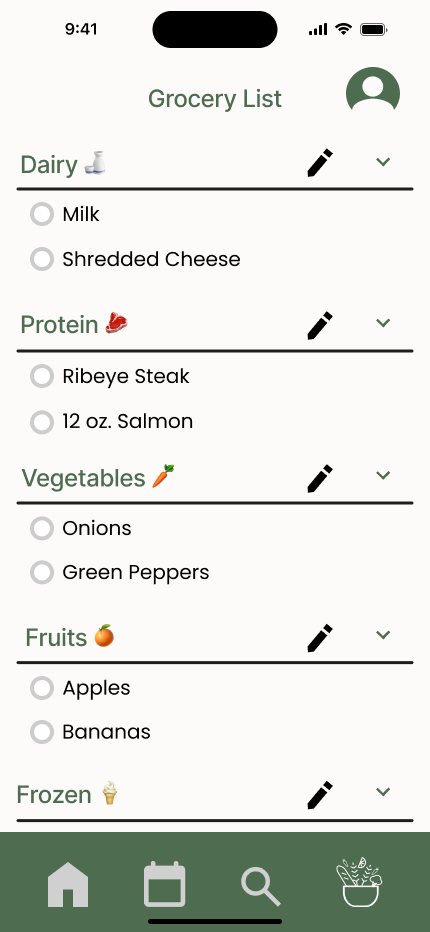
final prototype screens (left to right) - profile "activity", search with fitler window open, grocery list